
Spring Break the Classical Way: 5 Hands-On Adventures for Young Explorers
- Mar 12
- 5 min read
Spring break is often viewed as a complete cessation of activity, a week of "turning off the brain" to recharge. But at Cornerstone Preparatory Academy, we view education as a lifelong pursuit, not something that begins and ends with a school bell. As we approach the mid-semester pause, it is the perfect time to remember that our children are always learning, observing, and forming their characters.
Through our Explorers Institute, we emphasize a unique blend of innovation and tradition. We want our students to be curious about the world around them while remaining rooted in the timeless truths of Western Civilization. This spring break, I want to encourage our families to lean into this "Explorer" mindset. You don’t need a classroom or a textbook to cultivate Wisdom, Knowledge, and Virtue.
In fact, some of the most profound lessons happen in the backyard, on a local trail, or around a picnic blanket. Here are five hands-on, "out-of-the-box" ideas to help you turn spring break into a classical discovery quest.
1. The "Vivaldi Garden": Where Science Meets Symphony
In a classical academy, we believe that the subjects are not isolated silos. Biology is connected to art; music is connected to mathematics. This spring, why not bring this integrated approach to your own backyard?
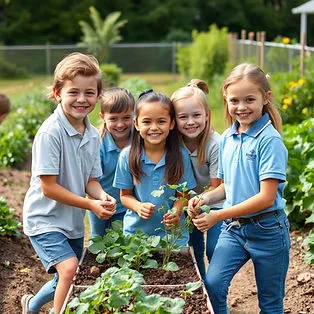
The "Vivaldi Garden" project is a simple yet beautiful way to teach your children about the lifecycle of plants while exposing them to the wonders of classical music. Antonio Vivaldi’s The Four Seasons is one of the most celebrated works of the Baroque era, and "Spring" specifically mimics the sounds of birds, murmuring streams, and gentle breezes.
The Activity: Find a small patch of earth or a few pots. While you and your children plant seeds, perhaps herbs for your kitchen or wildflowers for the bees, play Vivaldi’s "Spring" in the background.
The Lesson:
Scientific Observation: Discuss what seeds need to germinate (soil, water, sunlight). This ties directly into the botanical studies we emphasize.
Aesthetic Appreciation: Ask your child, "How does this music sound like a flower growing?" or "Can you hear the birds in the violins?"
Virtue of Stewardship: Tending to a garden requires patience and diligence, two virtues we strive to instill in every student.
2. Living History Backyard Campout: Patriotic Education Under the Stars
At Cornerstone, a patriotic education is central to our mission. We want our students to understand the sacrifices and the leadership that built our nation. Spring break offers a wonderful opportunity to step back in time with a "Living History" campout.
Rather than just a standard camping trip, frame the evening around the American leaders our students study, such as George Washington or Abraham Lincoln. These men spent much of their lives outdoors, often navigating difficult terrain by the stars.
The Activity: Set up a tent in the backyard and commit to a "no-tech" evening. Use a fire pit for cooking (safely!) and storytelling. Before the sun goes down, teach your children how to use a basic compass or a map of the local area. Once it’s dark, look up. Try to identify the North Star and talk about how early American explorers and soldiers used the heavens to find their way home.
The Lesson:
Leadership: Discuss a story of Washington’s bravery or Lincoln’s perseverance.
Navigation: Introduce the "Knowledge" of basic survival skills and celestial navigation.
Gratitude: By stepping away from modern luxuries for one night, children develop a deeper appreciation for the grit and determination of our ancestors.
3. Nature Journaling Like Beatrix Potter
Observation is the foundation of all great learning. Before a scientist can form a hypothesis or a writer can craft a story, they must first learn to see. This is why we value the tradition of nature journaling, a practice made famous by figures like Beatrix Potter and John James Audubon.
The Activity: Take a trip to a local park or even just a walk around the neighborhood. Give each child a dedicated notebook and some colored pencils. Their goal is to find one "specimen", a specific leaf, a beetle, or a flower, and sketch it in as much detail as possible. Encourage them to label the parts of the plant or animal and write a few sentences describing its behavior or environment.
The Lesson:
Literature Connection: Mention Beatrix Potter’s beautiful illustrations and how her deep love for nature informed her famous stories.
Focus and Discipline: Sitting still to draw a single object for 20 minutes builds the "Virtue" of attentiveness.
Classical Naturalism: This activity bridges the gap between art and science, showing that truth and beauty are often found in the smallest details of creation.

4. Architecture Scavenger Hunt: Discovering Western Civilization in Lynn Haven
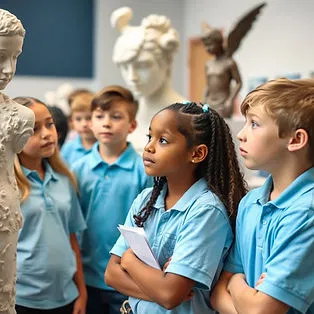
We are surrounded by the influence of Ancient Greece and Rome, but we often walk past it without a second thought. A virtuous education includes recognizing the architectural language of our civilization.
The Activity: Take a drive or a walk through the Lynn Haven and Panama City area. Challenge your children to find "classical" elements in the buildings around them. Look for:
Columns: Can they spot Doric, Ionic, or Corinthian styles?
Arches: Where do we see these structures used for strength and beauty?
Symmetry: How do buildings reflect the classical ideal of balance?
The local courthouses, historic banks, and even some of our older homes often feature these elements.
The Lesson:
History & Geography: Connect local landmarks to the broader story of Western Civilization.
Critical Thinking: Ask, "Why do you think the architect chose to put columns on this building? What does it make the building feel like (strong, important, timeless)?"
Local Pride: Helping children see the "Knowledge" embedded in their own town fosters a sense of belonging and civic pride.
5. The "Socratic Picnic": Asking Big Questions
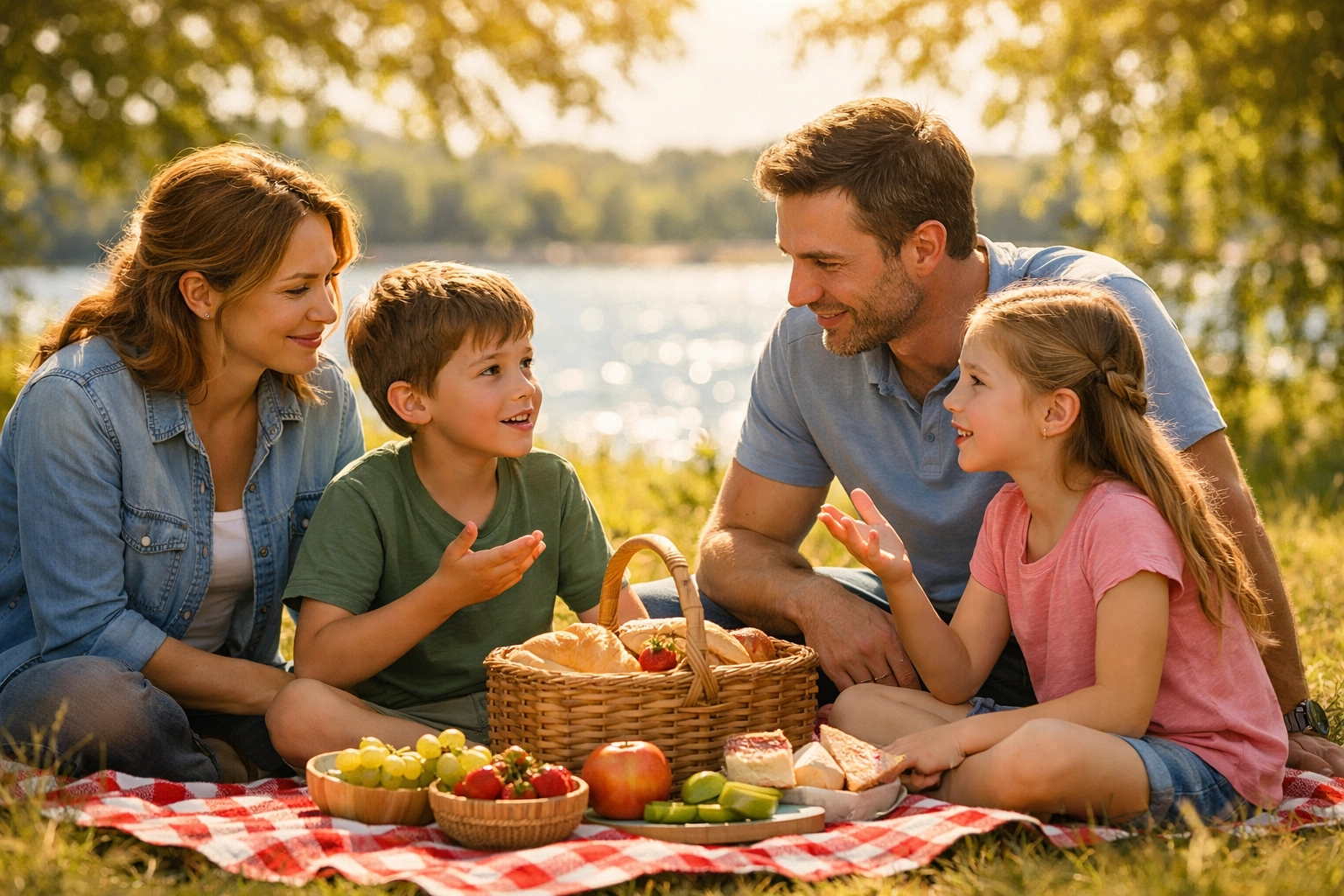
Finally, one of the most important aspects of a classical education is the Socratic method, the art of asking questions to lead a student to the truth. You don’t need a seminar table to do this; a picnic blanket works just as well.
The Activity: Pack a lunch and head to the waterfront or a quiet park. While you eat, pose one "Big Question" to the family. Avoid questions with simple "yes" or "no" answers. Instead, try questions like:
"What makes a person truly brave?"
"Why do we find certain things in nature beautiful?"
"Is it better to be powerful or to be just?"
The Lesson:
Wisdom: These questions encourage children to think deeply about abstract concepts and moral truths.
Logic: Listen to their reasoning and gently challenge them to explain "why" they believe what they do.
Family Bonding: Engaging in meaningful dialogue shows your children that you value their thoughts and that the pursuit of truth is a shared family adventure.
Why Classical Activities Matter
At Cornerstone Preparatory Academy, we are committed to empowering minds. While our teachers work tirelessly during the school year to provide a robust, traditional curriculum, the role of the parent as the primary educator is irreplaceable.
When you engage in these activities, you are showing your child that learning is not a chore to be completed for a grade: it is a way of life. By choosing a "Classical Spring Break," you are reinforcing the pillars of Wisdom, Knowledge, and Virtue in a way that is fun, memorable, and deeply impactful.
Whether you are sketching a flower, sleeping under the stars, or debating the meaning of justice over a sandwich, you are participating in the great tradition of the Explorers Institute. You are helping your child see that the world is a vast, orderly, and beautiful place waiting to be understood.
So, this spring break, let's ditch the screens and pick up the sketchbooks. Let’s turn off the noise and turn up the Vivaldi. Let’s lead our children toward a life of curiosity and character.
For more information on our mission and how we integrate these values into our daily curriculum, feel free to explore our mission page or learn more about Cornerstone Preparatory Academy.
Happy Exploring, and have a wonderful, virtuous spring break!